EN

Translate:

Get 20% off when you try our services!

Duvlin
Duvlin
  • Home
  • About
  • Services
  • Careers
  • Contact
  • More
    • Home
    • About
    • Services
    • Careers
    • Contact

EN

  • Home
  • About
  • Services
  • Careers
  • Contact

AUTOMATION THROUGH ARTIFICIAL INTELLIGENCE

RPA & AI drive end to end intelligent process automation

The integration of Robotic Process Automation (RPA) and Artificial Intelligence (AI) within Intelligent Process Automation (IPA) is revolutionizing the way organizations function by boosting efficiency, enhancing decision-making capabilities, and optimizing workflows. IPA has emerged as a crucial component for driving efficiency and fostering innovation. By combining RPA and AI, organizations can transform their operations in significant ways.


In this discussion, we will examine the distinctions between RPA and AI, their shared applications, their interaction capabilities, and how your organization can effectively prepare to utilize both technologies as part of an IPA strategy.

The difference between RPA and AI

RPA (Robotic Process Automation) and AI (Artificial Intelligence) are distinct technologies that serve different roles within the tech landscape. RPA focuses on automating repetitive tasks that follow fixed rules and inputs, utilizing software robots, often called bots, to handle routine operations efficiently. This technology excels in structured environments, allowing businesses to automate processes like data entry or invoice processing, resulting in faster execution and reduced errors.


On the other hand, AI encompasses a wider range of functionalities, involving systems that can learn, analyze data, make decisions, and adapt over time. AI can simulate human intelligence through applications like customer service chatbots, which leverage natural language processing (NLP) to understand inquiries and provide relevant, personalized responses. In essence, while RPA can be likened to the hands performing tasks, AI acts as the brain, enabling decision-making and intelligent interactions.
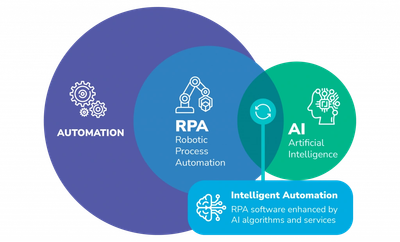
The Interaction Between RPA and AI

RPA and AI serve different functions, but they often complement each other effectively.

Sample Scenario:

Here’s an overview of how they work together when a customer wishes to open an account at a bank:


RPA Functions:


  1. Customer Verification: RPA automates the verification process by checking customer details, such as credit scores, against established databases. This automation speeds up the verification significantly.
  2. Form Completion: RPA software can fill out required forms automatically using the information provided by the customer, which minimizes the risk of human error.
  3. Account Setup: Once the customer’s details are verified, RPA can start the account creation procedure without any human involvement.


AI Functions:


  1. Compliance Monitoring: AI helps ensure that the process adheres to banking regulations, which reduces the chances of facing non-compliance penalties.
  2. Customer Support Chatbots: AI-driven chatbots assist customers by guiding them through the form-filling process, tailored to their specific inquiries about products or services.
  3. Fraud Prevention: AI systems can detect unusual patterns that may suggest fraudulent activity, enhancing security.


By combining RPA and AI, banks can streamline the account opening procedure, making it not only faster and more efficient but also improving compliance and security measures.

GET IN TOUCH WITH US TO GET STARTED

CREATE YOUR MULTIMEDIA SOLUTION

North America Office

100 NFederal Highway

Fort Lauderdale, FL, 33301, USA


Europe Office

Rue Jean-Dassier,

Genève, 1201, Switzerland

Copyright © 2026 Duvlin - All Rights Reserved

  • Privacy Policy
  • Terms of Service

Cookie Policy

This website uses cookies. By continuing to browse this site, you agree to our use of cookies.

DeclineAccept & Close